Water control
Match flow rates to floor condition and verify recovery so less water is left behind after each pass — dosing control can cut fresh-water use up to roughly 50% versus open-valve flooding (program-measured, varies by floor).
This page focuses on the engineering controls behind efficient cleaning: dosing accuracy, recovery performance, brush pressure, eco operating modes, battery discipline, and service data that helps teams reduce waste without softening the cleaning requirement.
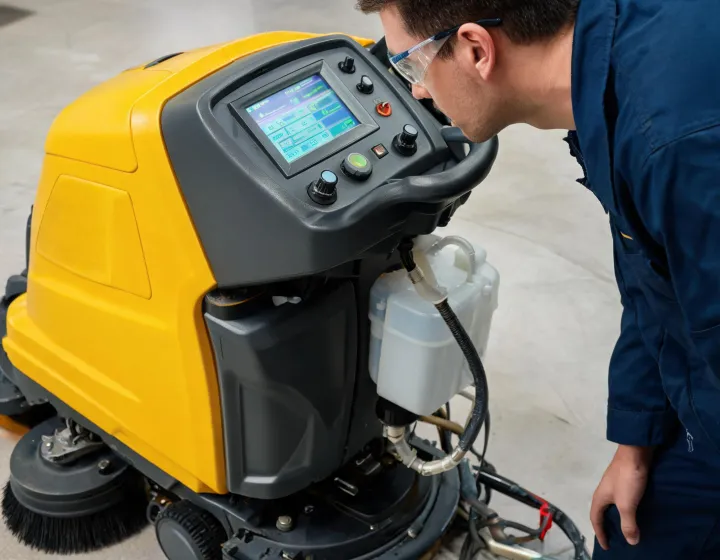
Resource performance in commercial cleaning is not a slogan. It is a set of settings and behaviors that can be observed on the machine and audited in the route. Kärcher technology makes the discussion concrete by putting attention on water flow, detergent use, recovery, brush pressure, runtime, and the number of passes required to meet the cleaning standard. When these variables are documented, the facility can improve cost control while maintaining visible results.
The dashboard style below treats the scrubber, sweeper, pressure washer, and vacuum as measurable assets. It does not ask teams to guess whether a program is efficient. Instead, it asks whether the machine is dosed correctly, whether recovery is working, whether filters are maintained, whether the operator can finish the route inside the cleaning window, and whether service actions are preventing repeat failures.
Match flow rates to floor condition and verify recovery so less water is left behind after each pass — dosing control can cut fresh-water use up to roughly 50% versus open-valve flooding (program-measured, varies by floor).
Use metering, training, and pad selection to reduce overuse while preserving the required finish. Many tasks run well at low single-digit g/L dilution rather than the heavier mixes operators reach for by habit.
Battery, charger, and route planning help teams finish the assigned area without unplanned stops; lithium chemistry holds runtime better than lead-acid in cold or multi-shift use, at a higher purchase cost.
Vacuum and sweeper performance depends on filter care, debris profile, and correct disposal routines — fine respirable dust needs an M- or H-class filter, not a general filter, to avoid recirculation.
Technical review materials help teams move from brand preference to operational evidence. A facility can use them to compare scrubber recovery, pressure washer accessory compatibility, vacuum filter selection, and maintenance routines before it standardizes equipment across locations.
Inputs for square footage, tank cycles, operator time, battery runtime, and recovery observations.
Review of PSI, GPM, hose length, nozzle style, pump duty, heat, and detergent pairing.
Planning fields for pads, brushes, squeegees, filters, hoses, and routine replacement triggers.
Document floor type, soil, traffic, current water use, detergent practice, and cleaning acceptance criteria.
Select brushes, pads, tank capacity, pressure range, filters, and accessories according to the baseline.
Set route, dosing, recovery checks, charging routines, and daily inspection items that crews can repeat.
Use service notes, consumable usage, and supervisor feedback to adjust settings instead of replacing equipment prematurely.
Efficiency claims are only honest when the counter-cost is named. Each control below has a defensible argument on both sides, and the right setting depends on the floor and the budget rather than a single "eco" default.
Lower flow, brush pressure, and motor speed cut water, detergent, and energy, but a heavily soiled floor may then need a second pass — erasing the saving. Eco settings suit maintenance cleaning; restorative cleaning often needs full power.
Lithium gives longer runtime, faster charging, and steadier cold performance, but raises purchase cost. Lead-acid is cheaper up front and fine for single-shift sites. The break-even follows shift count, not preference.
Slower, well-aligned squeegee passes recover more water and leave drier floors; pushing speed leaves moisture and slip risk. Tighter recovery can mean a slower route, so the target is the slowest acceptable speed, not the fastest.
Recording runtime, dosing, and recovery improves accountability but adds steps to each shift. Lightweight checklists are worth the minute; over-instrumented logging that crews skip is worse than none.
Share your current machine settings, floor routes, water access, detergent practice, and service records. The review can identify which controls deserve attention before the next purchase.
Request Technology Review