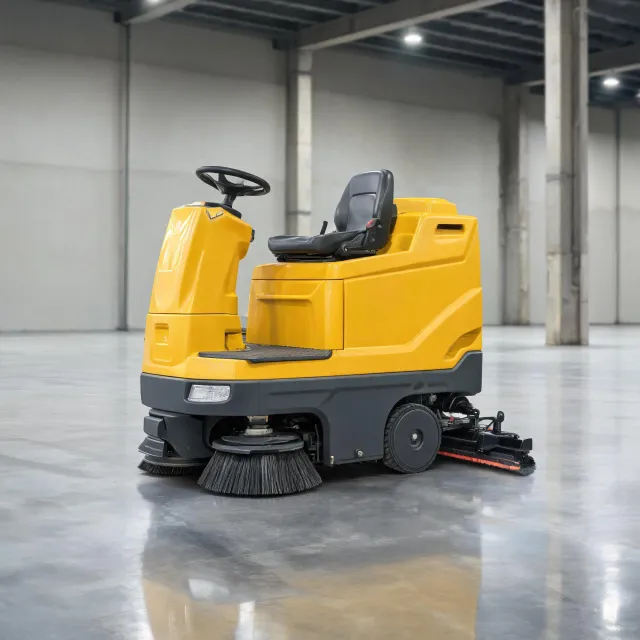
Floor Scrubbers
Consistent solution delivery and recovery for aisles, retail floors, production corridors, and high-traffic entrances.
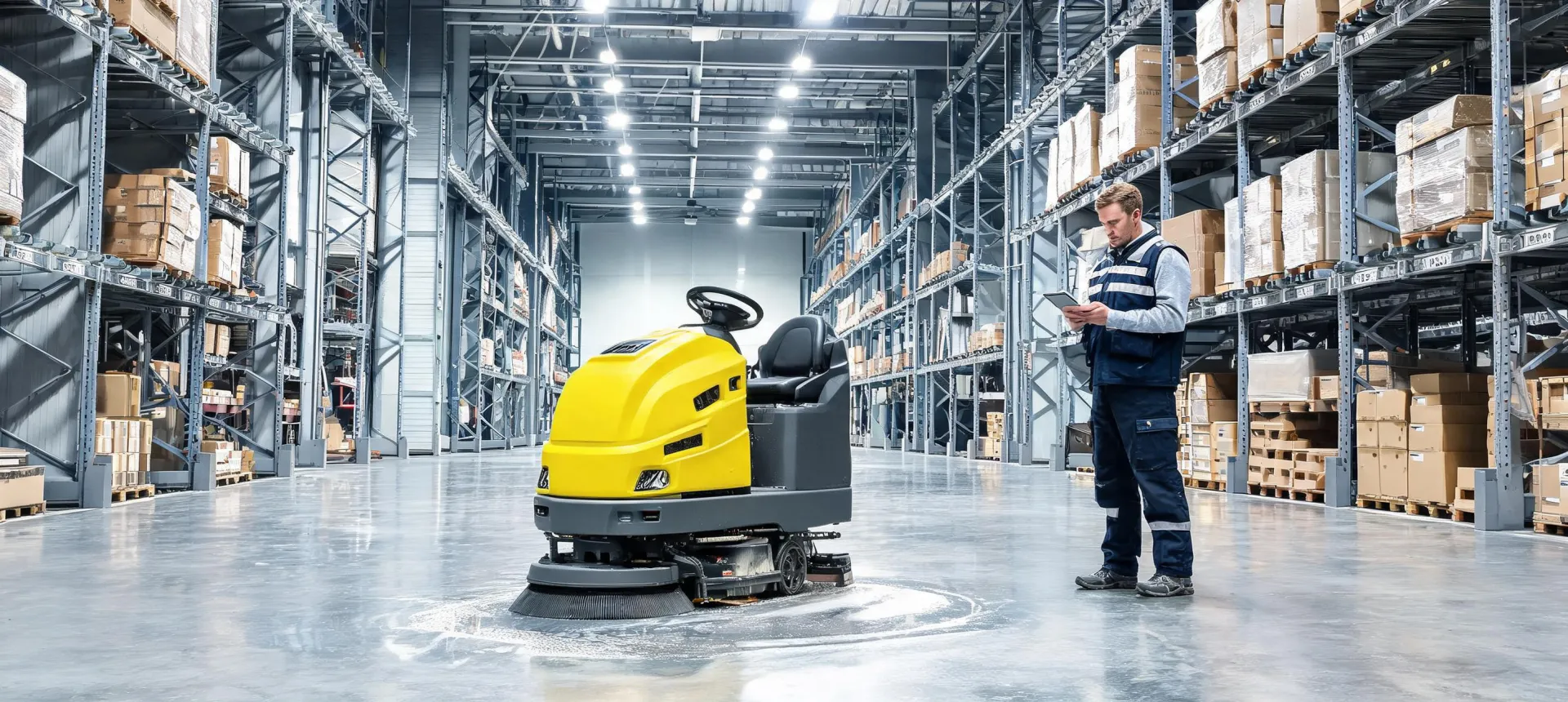
Match floor scrubbers, sweepers, pressure washers, and industrial vacuums to soil load, square footage, water recovery needs, operator training, and service access before a machine ever reaches the dock.
Facility teams need more than a product name. The operating profile below gives procurement, safety, and service teams a shared language for selecting Kärcher equipment.
No single machine class covers every surface. We name these boundaries up front so a site does not buy a scrubber for a floor that needs a sweeper-first pass, or a cold-water washer for a task that needs heat.
Consistent solution delivery and recovery for aisles, retail floors, production corridors, and high-traffic entrances.
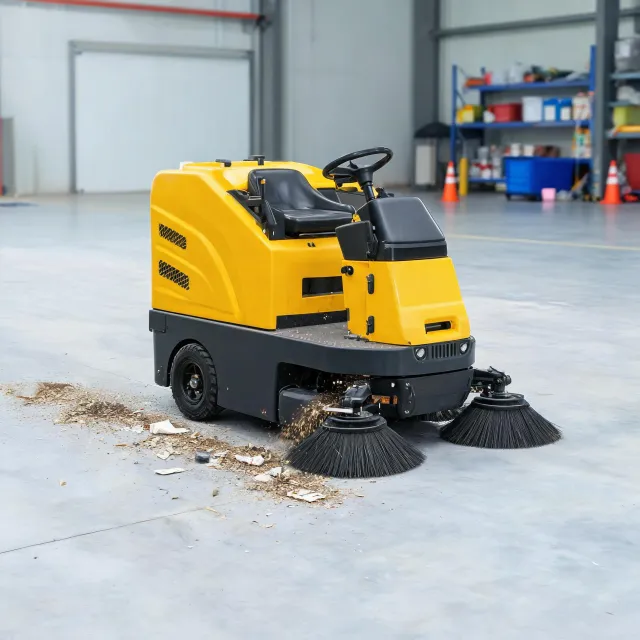
Dry soil pickup for logistics dust, parking structures, outdoor aprons, and manufacturing debris before wet cleaning.
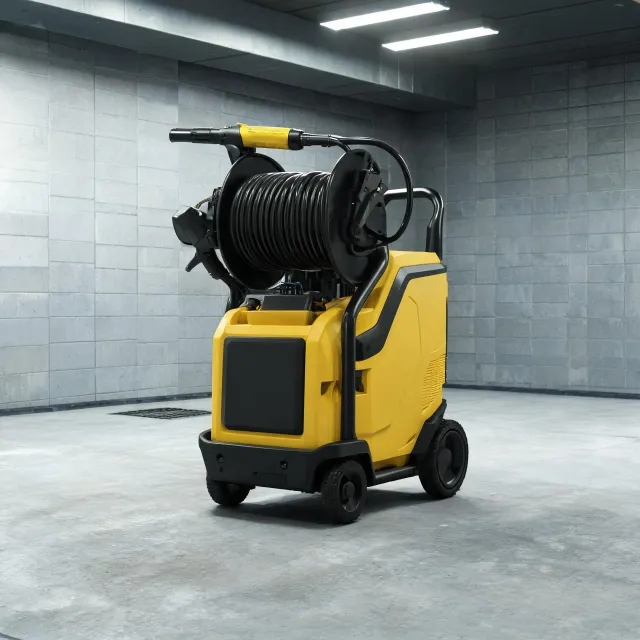
Hot and cold water configurations for exterior surfaces, fleet wash-down, equipment cleaning, and sanitation prep.
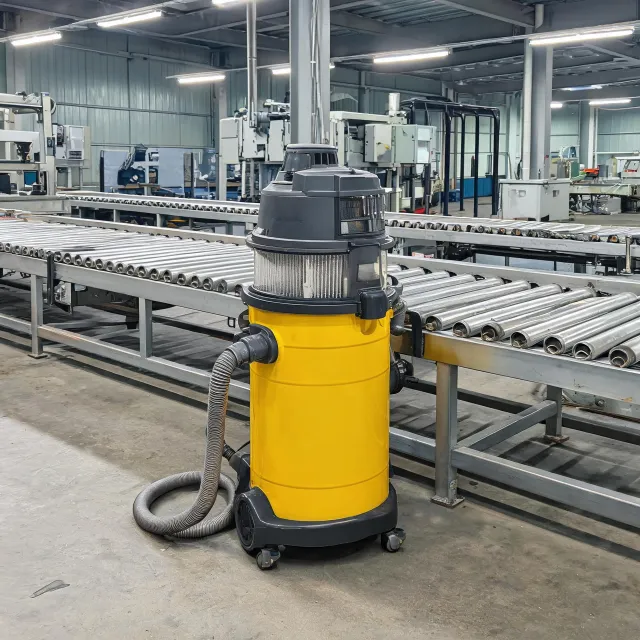
Wet, dry, and fine dust collection support for planned maintenance, spill response, workshop cleanup, and tool-side extraction.
Kärcher programs focus on dosing accuracy, recovery performance, brush selection, and operator behavior. The result is a measurable cleaning process where teams can document what changed, where water was saved, and how equipment uptime held through peak periods.
Start with cleanable square footage per shift, route width, operator availability, tank refill distance, and recovery performance requirements. Below roughly 2,000 m² per shift or in tight retail aisles a walk-behind usually wins on maneuverability and lower cost; above that, on long open warehouse runs, a ride-on recovers its higher purchase and battery cost through coverage rate. Neither is universally "better" — the cross-over depends on aisle width and shift hours.
This is a genuine trade-off, not a one-way answer. Cable machines remove charging logistics and never run flat mid-route, but the cord limits range and creates a trip hazard in occupied spaces. Battery (lithium or lead-acid) frees the operator and suits retail and healthcare floors, but adds charger location, runtime planning, and battery replacement cost over the fleet life. We size the answer to route length and whether the site can host charging.
Often, but nozzle set, pump duty cycle, water temperature, and detergent compatibility should be checked against each application. Hot-water units clean grease and sanitation surfaces faster but cost more and need fuel or heavy power; a cold-water washer is cheaper and lighter yet slower on baked-on soil. A single unit is a compromise — heavy mixed duty usually justifies two specialised machines.
Share model family, runtime pattern, water hardness, battery type, consumable history, and a clear description of the floor or wash-down task.
Squeegees, brushes, pads, filters, hoses, batteries, and pressure washer accessories usually define day-to-day availability.
Combine visual inspection with slip-risk checks, water recovery observation, operator feedback, and a repeatable route audit.
Yes. Quiet mode, battery operation, compact turning radius, and predictable recovery all matter in retail, healthcare, and education sites.
Send the floor type, traffic profile, soil load, water access, and service expectations. A Kärcher specialist can help compare machine classes before your team schedules a demo.
Request a Demo