Kärcher is known for bright yellow machines, but the stronger signal is operational discipline: application testing, machine category depth, service structures, and product decisions made around real commercial cleaning routes.
Kärcher works in a market where buyers ask hard questions about water recovery, operator training, brush life, pump durability, service access, and the cost of downtime. The company position is not built on one machine category; it is built on the ability to connect floors, surfaces, crews, consumables, and maintenance into one technical conversation. That approach is especially important for large facilities that operate across regions because a product that looks correct on paper can still fail if the route, floor finish, detergent practice, or charging area is poorly matched.
The roadmap for professional cleaning equipment therefore emphasizes practical intelligence: machines that are easier to size, easier to maintain, and easier to document. A warehouse manager may focus on ride-on productivity, while a food plant may care more about wash-down pressure and sanitation zones. A retailer might prioritize quiet operation and rapid recovery, while a municipal team needs rugged sweepers and cold-weather readiness. Kärcher's value is the ability to translate those differences into specifications that can be inspected and supported.
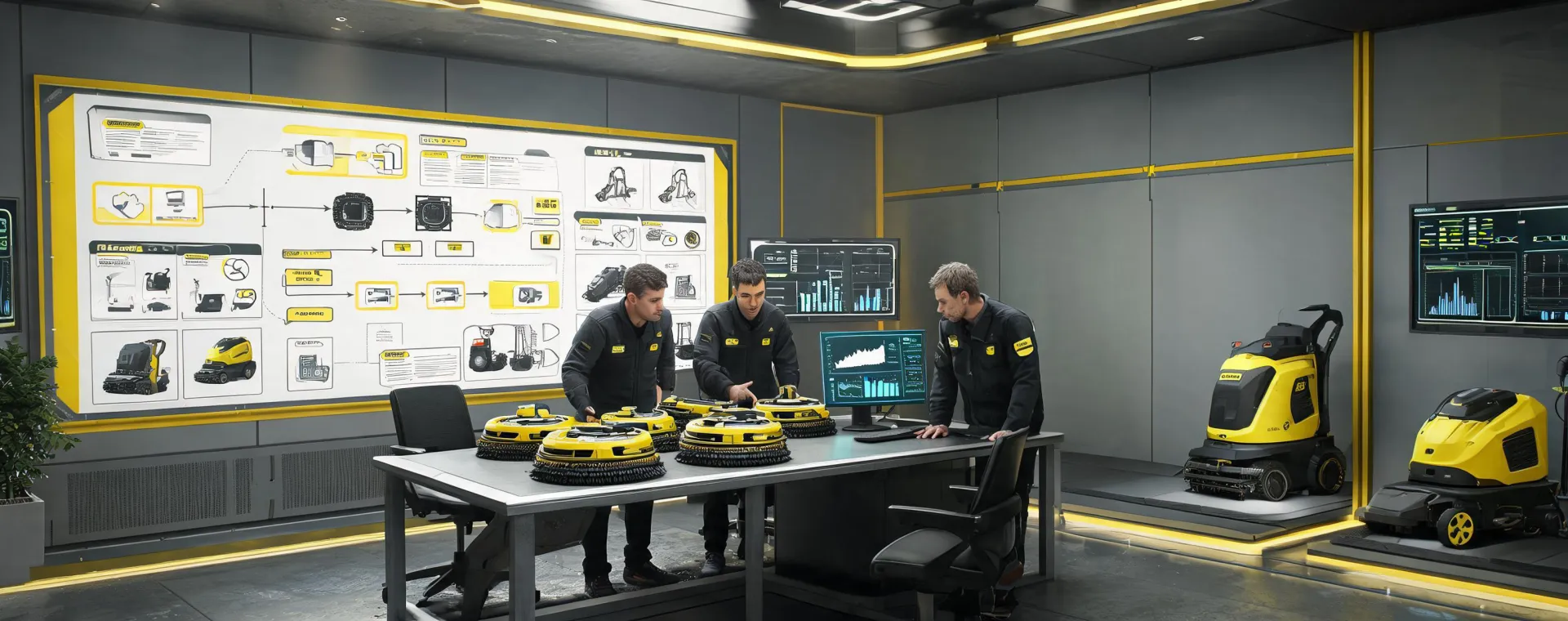
The brand begins with a focus on technical equipment and practical problem solving, a heritage that still shapes commercial cleaning product decisions.
Hot water pressure washer development established a category where cleaning performance depends on pump reliability, temperature control, accessories, and safe handling — typically rated today across roughly 100–200 bar and water heated to around 80°C for grease and sanitation work.
Scrubbers and sweepers become central to facility operations as modern warehouses, retail formats, and manufacturing sites demand repeatable cleaning routes.
Service records, runtime expectations, operator training, and resource efficiency now sit alongside core mechanical performance in every serious equipment review.
Commercial cleaning purchases are rarely made by one person. Procurement teams ask for lifecycle clarity, facility leaders ask for productivity, safety teams ask about water recovery and training, and service leaders ask whether parts and technical support will keep pace. Kärcher's work is to keep those questions connected rather than treating the machine as an isolated asset.
These stakeholders frequently pull in opposite directions, and an honest brand names the tension instead of hiding it. Operations wants the largest ride-on for coverage; procurement wants the lowest lifecycle cost; safety prefers quiet, low-range battery units in occupied space. The "right" fleet is a negotiated compromise across those views, not the machine with the best single spec — and we would rather make that trade-off visible than promise one product satisfies everyone.
We are also clear about the limits of standardising on one supplier. A single-brand fleet simplifies training, parts, and service records, but it can over-fit a site to one product philosophy and reduce price leverage; very specialised tasks — explosion-rated dust, ultra-high-pressure surface prep, ride-on sweepers for large yards — may still need a purpose-built or specialist machine rather than a general commercial range. Recognising where the catalogue ends is part of giving a defensible recommendation.
Lifecycle cost, vendor accountability, documentation, and model standardization.
Route coverage, operator acceptance, cleaning quality, and productivity by shift.
Water recovery, slip-risk control, noise, training records, and wash-down boundaries.
Parts planning, preventive maintenance, repair history, and fleet readiness.
Send the cleaning routes, surface mix, current machine issues, and service expectations. The response can focus on evidence rather than a generic catalog recommendation.
Discuss Fleet Fit